Choosing a Path
Healthcare Careers Without a Medical Degree: Your Complete Guide
For every student who has ever been told "you should become a doctor," there is a quiet, nagging question underneath the advice: is that actually the right path for me? Medicine is one route into healthcare, but it is far from the only one. The hospital, clinic, or research lab you have always imagined yourself working in is staffed by dozens of different professions, each with its own training route, its own culture, and its own way of making a difference to patients. Some of these roles involve far more direct patient contact than a junior doctor gets in their first years. Others sit closer to the science bench than the bedside. Several are evolving rapidly because of technology and changing population needs, which makes them genuinely interesting career bets for the decade ahead.
This guide walks through the main healthcare paths beyond medicine, explains what each actually looks like day to day, and helps you think through where to study and why.
Why the "Non-Doctor" Label Is Misleading
The phrase "healthcare career without a medical degree" can sound like a consolation prize. It is not. Nursing, physiotherapy, pharmacy, and the allied health professions are regulated, degree-level careers in virtually every developed country. They require serious academic commitment, supervised clinical training, and professional registration. In many systems, these professionals hold significant autonomous responsibility: a specialist nurse prescribing medication, a radiographer reporting on images, or a pharmacist running a medicines optimisation clinic is exercising clinical judgement, not following a checklist.
The distinction matters because students sometimes drift into these paths with unclear expectations in both directions. Some underestimate the rigour involved; others overestimate the ceiling. Getting a realistic picture of the day-to-day work is the best place to start.
Nursing: The Broadest Path Into Patient Care
Nursing is the largest single healthcare profession in most countries, and it is also the most internally diverse. Depending on where you train and specialise, nursing can mean working in an intensive care unit managing ventilated patients, running a community health clinic, advising people with long-term conditions, or coordinating complex surgical recovery. The common thread is that nursing centres on the whole patient, not a single organ or system.
In most high-income countries, nursing is now a degree-level entry profession. The UK moved to an all-graduate profession some years ago; Australia, Canada, and the United States all require at minimum a Bachelor of Science in Nursing (or equivalent) for registered nurse status. In Germany, nursing is undergoing significant reform and the qualification landscape is shifting, so checking current requirements with German health authorities is important. Spain has a university-based nursing degree that leads to EU-recognised registration.
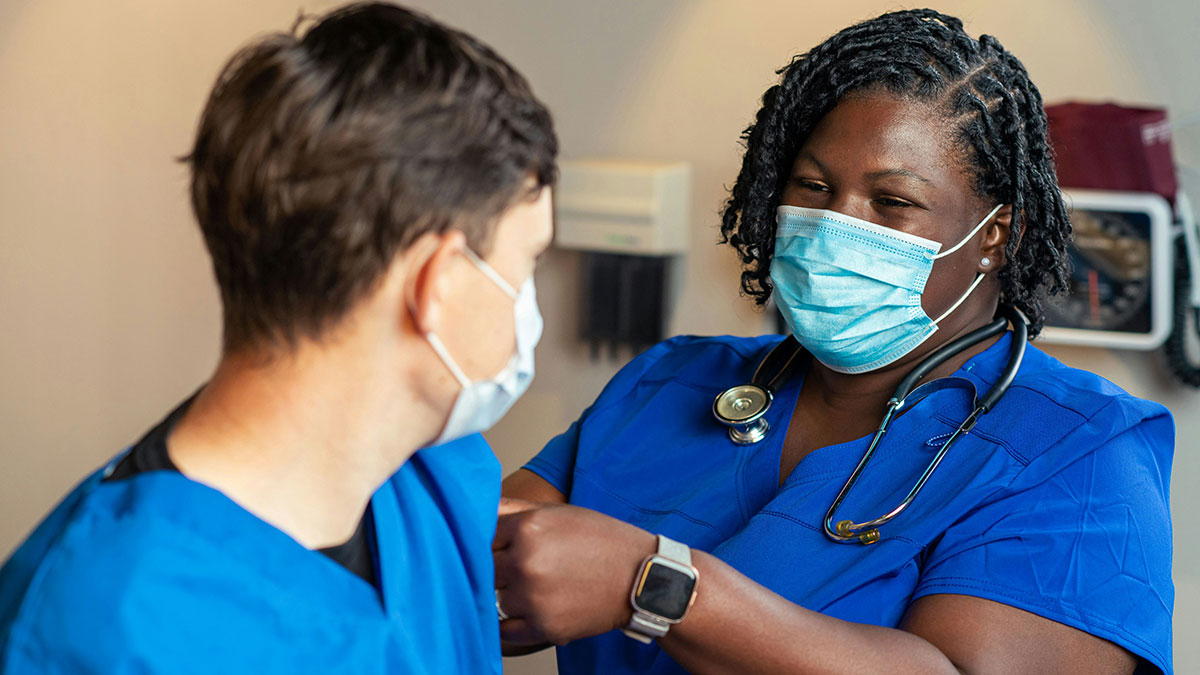
Day to day, nursing involves a great deal of direct patient contact, careful documentation, medication administration, patient education, and communication with families and the wider clinical team. Senior nurses take on leadership, education, and increasingly prescribing roles. If you want to be at the centre of patient care from early in your career, nursing offers that faster than medicine in most countries.
Physiotherapy and Allied Therapies: Rehabilitation and Movement
Physiotherapy (called physical therapy in North America) focuses on restoring and maintaining movement and function after injury, surgery, illness, or across long-term conditions. Physiotherapists work in hospitals, sports clinics, community rehabilitation, paediatrics, neurology, and cardiorespiratory care. A day might involve assessing a patient recovering from a stroke, designing an exercise programme for someone with chronic back pain, or working pitchside with an elite sports team.
The profession requires a strong foundation in anatomy, physiology, and biomechanics, combined with hands-on clinical reasoning skills. In the UK, Australia, and Canada, entry is typically via a three or four year undergraduate degree, with postgraduate routes for those who hold a prior degree in a related science. In the US, physiotherapy now requires a Doctor of Physical Therapy (DPT), a three-year postgraduate qualification, which is worth factoring into your long-term planning if North America is your target destination.
Closely related professions worth considering include occupational therapy (helping people engage in meaningful daily activities after illness or disability), speech and language therapy (covering communication, swallowing, and language development), and podiatry (foot and lower limb health). Each has its own training route and registration body; the day-to-day work is distinct, and all three are in genuine demand across ageing populations.
Pharmacy: Where Chemistry Meets Clinical Care
Pharmacy is often misunderstood as a profession confined to dispensing boxes of tablets. In practice, contemporary pharmacy is a clinically sophisticated career that sits at the intersection of pharmacology, patient safety, and direct patient counselling. Pharmacists in hospital settings review complex medication regimens, identify dangerous drug interactions, support prescribing decisions, and in many countries now hold prescribing authority themselves. Community pharmacists are often the most accessible healthcare professional a person can see without an appointment.
Training in most countries is a four to five year undergraduate master's degree (MPharm in the UK, PharmD in the US and Canada), followed by a period of supervised practice before full registration. The science content is demanding: organic chemistry, pharmacokinetics, microbiology, and physiology all feature heavily. If you find yourself genuinely interested in how drugs work at a molecular level and also want patient interaction, pharmacy offers a rare combination of both.
The regulatory landscape for international pharmacists varies significantly. A pharmacy qualification from one country does not automatically transfer to registration in another, and bridging examinations are often required. Check the registration requirements of the country you intend to practise in before you commit to a specific programme.
Biomedical Science: The Laboratory Behind Every Diagnosis
Every blood test, tissue biopsy, and microbiological culture result that reaches a clinician has been processed and interpreted by a biomedical scientist. This is a profession that operates largely away from the patient's bedside but is absolutely central to diagnosis and treatment decisions. Biomedical scientists work in clinical biochemistry, haematology, microbiology, histopathology, immunology, and transfusion medicine.
Day to day, the work involves running and maintaining laboratory analysers, interpreting results, flagging abnormal findings, and contributing to quality assurance. At senior levels, it includes service management and research. If the idea of solving diagnostic puzzles through scientific method appeals more than direct patient care, this could be the right fit.
Entry is typically via a biomedical science degree that is accredited by the relevant professional body (in the UK, the Institute of Biomedical Science; in Australia, equivalent accreditation applies). In the US, the route is somewhat different, with medical laboratory science or clinical laboratory science degrees leading to certification. As with pharmacy, check the specific accreditation requirements for the country you want to practise in before choosing a programme.
Biomedical science also serves as a strong foundation for those considering a move into clinical research, medical science liaison roles in the pharmaceutical industry, or even graduate-entry medicine later on.
Radiography: Imaging and Oncology
Diagnostic radiography involves acquiring the medical images that underpin modern diagnosis: X-rays, CT scans, MRI, and ultrasound. It is a technically demanding role that requires understanding both the physics of imaging equipment and the clinical context of each examination. Radiographers work directly with patients, many of whom are anxious or unwell, which makes communication skills just as important as technical competence.
Therapeutic radiography (known as radiation therapy in many countries) is a separate, closely related profession focused on planning and delivering radiotherapy treatments for cancer. It combines physics, anatomy, and direct patient care over weeks-long treatment courses, often with patients who are dealing with serious illness. This makes it emotionally demanding but also deeply meaningful work.
Training is a three to four year undergraduate degree in most countries, with clinical placements integrated throughout. In the UK, the College of Radiographers oversees accreditation. In Australia, the Australian and New Zealand College of Radiologists and the Australian Society of Medical Imaging and Radiation Therapy are the key bodies to consult. In North America, programmes and professional titles differ by country and state or province, so checking local regulatory requirements is essential.
Clinical Research: The Engine of Medical Progress
Clinical research professionals design, manage, and conduct the trials that bring new drugs, devices, and therapies from laboratory to patient. This is a broad field that includes clinical research associates (who monitor trials across hospital sites), clinical data managers, regulatory affairs specialists, and medical writers. It also includes research nurses and allied health professionals embedded within trial teams.
Entry routes into clinical research are more varied than in the clinical professions above. Some people enter directly from life sciences degrees; others move into the field after gaining clinical experience in nursing, pharmacy, or biomedical science. A number of postgraduate certificates and master's programmes in clinical research are available across the UK, Australia, Canada, and the US for those wanting formal qualification.
The day-to-day work depends heavily on the specific role. A clinical research associate might spend much of their time travelling between hospital sites, reviewing patient records and ensuring trial protocols are being followed correctly. A regulatory affairs specialist works with complex documentation and submissions to health authorities. Both require meticulous attention to detail and an ability to work within strict ethical and regulatory frameworks.
Clinical research is worth highlighting specifically for students interested in how healthcare advances rather than simply in delivering care as it currently exists. It also connects well to roles in the pharmaceutical and medical technology industries, where career paths can extend well beyond the traditional healthcare setting.
How Study Routes Differ Between Countries
One of the most important practical questions is where to study, particularly if you are open to studying abroad or planning to work in a different country from where you train.
United Kingdom: Most of the professions above have clearly defined, accredited undergraduate degree programmes. Regulated professions require registration with bodies such as the Nursing and Midwifery Council, the Health and Care Professions Council, or the General Pharmaceutical Council. Domestic and international tuition fees differ; check current figures directly with universities and the relevant government guidance.
Australia: Allied health education is well-developed, and Australian qualifications are generally well-regarded internationally. Professional registration for nursing, physiotherapy, pharmacy, and others falls under the Australian Health Practitioner Regulation Agency (AHPRA). International students should verify their visa options through official Australian government channels, as rules change.
Canada: Healthcare is regulated at the provincial level, which means a qualification accepted in Ontario may require additional steps for registration in British Columbia. This is an important nuance that many international students overlook. Research the province where you intend to practise before choosing a programme.
United States: Entry requirements are often more academically selective and pathways can be longer than in other countries, particularly for pharmacy (PharmD) and physical therapy (DPT), which are postgraduate qualifications. Licensing is state-by-state, adding another layer of complexity for internationally mobile students.
Germany: Germany is increasingly opening healthcare programmes taught in English, and the country faces well-documented workforce shortages in nursing and therapy professions. However, language skills remain practically important for clinical practice, and recognition of foreign qualifications involves a defined process. Check with the relevant German federal or state authority.
Spain: Spain has well-established nursing and physiotherapy programmes within its public university system, and programmes are increasingly available in English in private institutions. EU-recognised qualifications from Spain facilitate movement within Europe but may require additional steps for recognition outside the EU.
Choosing the Path That Fits You
A useful starting point is to think honestly about three things: how much direct patient contact you want, how comfortable you are with the science content of each route, and how important early autonomy is to you.
If daily patient relationships and holistic care appeal, nursing and the therapy professions offer both. If you are drawn to science and problem-solving but want clinical application, pharmacy and biomedical science may fit better. If you want to shape how medicine works at a systems level, clinical research or health informatics could be the direction worth exploring.
It is also worth thinking about flexibility. Some of these professions, particularly nursing and clinical research, have career paths that branch significantly with experience: into leadership, education, industry, policy, or advanced clinical practice. Others are more narrowly specialist, which suits some people very well and frustrates others.
None of this is a decision you need to make in isolation. The landscape of healthcare study abroad, professional registration requirements across different countries, and how automation is beginning to change roles like radiography and laboratory science are all factors that are genuinely complicated to navigate on your own.
If you would like to think through these options with someone who knows the territory, AxoPrep's advisors and the Atlas network of international counsellors offer free consultations that can help you match your interests, academic profile, and country preferences to a realistic shortlist of programmes. Reach out through axoprep.com to get started.