
Choosing a Path
Foundation Year or Direct Entry: Which Route Is Right for You?
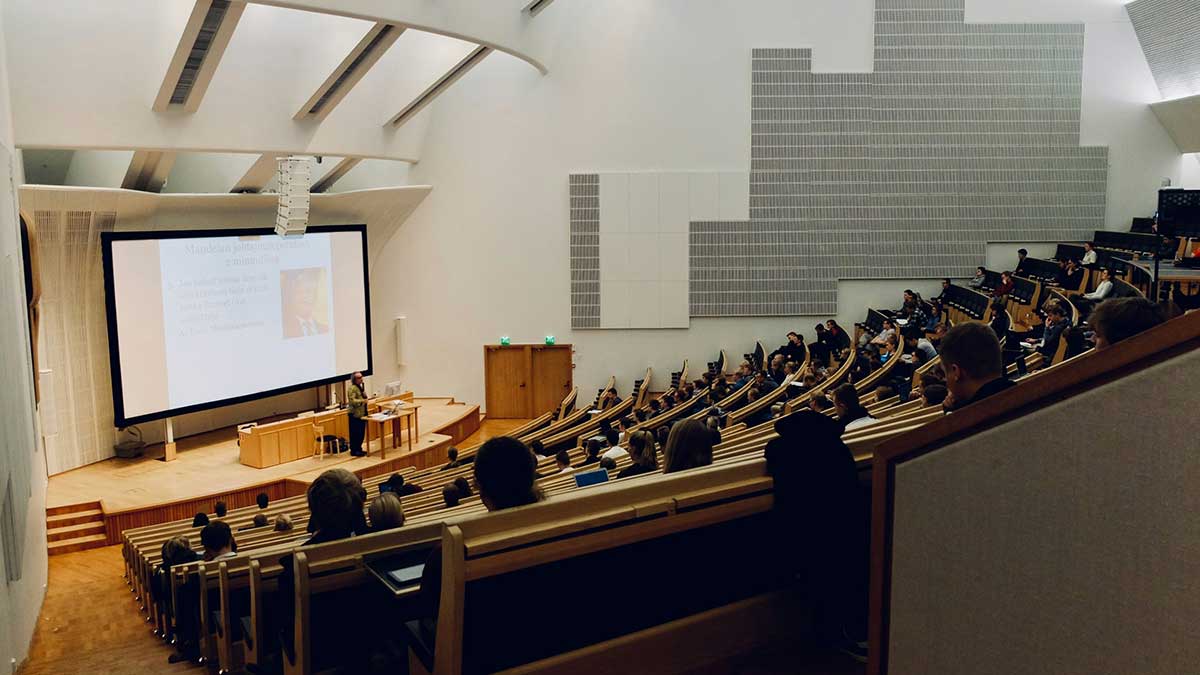
Two students sit down with identical ambitions: both want a UK university degree, both are weighing their options carefully, and both keep arriving at the same fork in the road. One will walk straight into Year 1 of a bachelor's programme. The other will spend a year in a preparatory programme first. The question is not which path sounds more impressive. The question is which path is actually right for you, given where you are right now.
This article breaks that decision down honestly, without the marketing language that tends to surround foundation programmes on university websites.
What Is a Foundation Year, Exactly?
A foundation year is a one-year preparatory programme, typically offered by a UK university or a partner college, that is designed to bring students up to the standard required to enter the first year of a bachelor's degree. It is sometimes called a foundation programme, an international foundation year, or an integrated foundation year, depending on the institution.
The word "foundation" is doing real work here. These programmes sit below degree level in the UK's qualification framework. They are not part of the bachelor's degree itself. When you complete a foundation year successfully and progress into Year 1, you are beginning your undergraduate study, not continuing it. Your full degree will still take three years in most subjects, or four in subjects like engineering, medicine, or languages with a year abroad. That means a foundation year adds a year to your overall timeline.
Many universities offer guaranteed or conditional progression to a named degree course if you meet the required grades in your foundation year. That guarantee can be genuinely valuable, but it is worth reading the small print: the grades required for progression are not always as straightforward as the brochure implies.
When Does a Foundation Year Make Sense?
There are three main situations where a foundation year is a rational, well-reasoned choice rather than a consolation prize.
Your Secondary Qualifications Are Not Accepted for Direct Entry
UK universities publish entry requirements that typically reference A-levels, the International Baccalaureate, or a shortlist of other recognised qualifications. If your secondary school system is not on that list, or if the grades you achieved fall below the threshold for direct entry, you may simply be ineligible to apply directly to Year 1, regardless of how capable you are.
This is particularly common for students coming from countries whose secondary qualifications the UK system does not map cleanly onto its own. It is not a judgment on the quality of your education. It is a structural gap that the foundation year exists to bridge.
In this situation, a foundation year is often the most honest and efficient solution. Trying to convert qualifications that universities are not set up to assess is rarely worth the effort, and some conversion routes take just as long as a foundation year anyway.
Your English Is Not Yet at the Required Level
This is where the decision becomes more nuanced, and where it is worth understanding a regulatory detail that many students miss.
Because a foundation year sits below degree level, it falls under different visa rules in the UK. To study a foundation year on a Student visa, you will generally need to pass a UKVI-approved Secure English Language Test, such as IELTS for UKVI, at the CEFR B1 level. This is the level the UK Visas and Immigration authority requires for below-degree-level courses at most institutions.
Degree-level courses, by contrast, typically require a higher English level, often CEFR B2 or above, but they can also accept a wider range of English evidence. Some degree programmes accept qualifications like the TOEFL, Duolingo English Test, or a university's own in-house assessment, depending on institutional policy. The foundation year's visa requirement is more specific: it generally locks you into a UKVI-approved test, and the B1 threshold, while lower than what a degree course needs, still has to be met through the approved route.
What this means in practice is that a foundation year can be a legitimate stepping stone for students whose English is functional but not yet at undergraduate level. You arrive, you study in English, your language develops alongside your academic content knowledge, and you progress into your degree better prepared than you would have been had you struggled through Year 1 with insufficient English.
However, it also means that if your English is already close to the required level for direct entry, it may be worth investing a few months in targeted preparation and applying directly, rather than spending an entire extra year and the costs that come with it. The right answer depends on how far you genuinely are from the direct entry threshold.
You Are Changing Subject
This is perhaps the most underappreciated use case for a foundation year. If you studied sciences at school but want to read economics at university, or if you completed a humanities-heavy curriculum and want to study computer science, you may lack the specific subject knowledge that degree programmes expect from Day 1.
A subject-specific foundation year, particularly in STEM fields, can fill that gap in a structured way. Rather than teaching yourself calculus from scratch during your first university semester while also managing lectures, lab work, and a new country, you can build that knowledge during the foundation year when the stakes are lower.
This route is most sensible when the subject gap is significant. If you are missing one A-level equivalent topic, there are faster ways to fill that gap. If the entire disciplinary framework is new to you, a foundation year is genuinely useful.
The Costs You Need to Think Through Honestly
A foundation year adds a year to your time in the UK. That means an additional year of tuition fees and an additional year of living costs. Check current pricing directly with each institution, because fees vary considerably between universities, between subject areas, and between integrated programmes run by the university itself and those run by partner pathway providers.
The living cost calculation matters just as much as the tuition figure. Accommodation, food, transport, and personal expenses accumulate over twelve months. Depending on the city you are in, this is a meaningful sum of money. Some families treat this as simply the cost of entry, which is a legitimate position if the alternatives are genuinely not available. Others decide that a period of intensive English preparation or grade improvement at home, followed by direct entry, is the more financially rational route.
There is no universally correct answer. The honest question to ask is: what is the counterfactual? If the alternative to a foundation year is spending eighteen months improving your English and qualifications at home, the cost difference may be smaller than it first appears, and the foundation year's structured environment and guaranteed progression may be worth paying for.
The Case for Improving and Applying Directly
The foundation year is not automatically the right answer whenever a student does not meet direct entry requirements. For some students, the better move is to take time, address the gap specifically, and apply directly.
If your English is the main barrier, dedicated English preparation can move you from B1 to B2 level in a matter of months if you approach it seriously. Resources like the SAT are relevant if you are also considering US universities, but for UK direct entry, the focus is on building the English proficiency and academic vocabulary that undergraduate study demands. A well-prepared student who applies directly avoids the extra year, the extra costs, and the slight ambiguity that sometimes comes with foundation year qualifications when applying for graduate programmes later.
If your grades are the main barrier, retaking qualifications or completing an additional year of secondary study in your home country may be faster and cheaper than a UK foundation year, depending on your national education system. This is not always possible, but it is worth examining before assuming the foundation year is the only path forward.
If both English and qualifications are barriers, a foundation year often genuinely is the most efficient combined solution, because it addresses both at once in a structured environment where you are already in the country where you want to study.
Integrated Foundation Years vs. Pathway Providers
There is an important practical distinction between two types of foundation year that often gets glossed over.
Some universities offer an integrated foundation year that is run entirely by the university itself, on the same campus, with the same facilities, and often with the same academic staff. Progression routes are clear, and the transition into Year 1 tends to be smooth.
Other universities partner with external pathway providers, which are specialist companies that run foundation programmes in dedicated centres, sometimes on campus and sometimes nearby. These programmes can be very good, but they are a different experience from studying inside the university itself. The social integration, the campus access, and the academic culture may differ.
Neither model is inherently superior, but the distinction matters for your decision. Ask specifically who runs the programme, where it is physically delivered, what the progression guarantee actually requires, and what happens if you do not meet the progression grade. These are not awkward questions. They are the right ones.
What About Foundation Years in Other Countries?
While the UK is where the foundation year concept is most formalised and most common, variants exist elsewhere. Australian universities offer similar preparatory programmes for international students, often through university colleges or partner providers. Some European universities offer bridging or preparatory years for students whose prior qualifications do not meet local requirements.
In Canada and the United States, the concept works somewhat differently. These systems tend to use credit-based frameworks where you can build up prerequisites over time rather than completing a single preparatory year. If your ambitions include North American universities, the route planning looks different, and the SAT becomes relevant as part of the direct application process for US institutions.
The core question, though, is the same regardless of country: what gap are you actually trying to close, and what is the most efficient and honest way to close it?
Making the Decision
Run through these questions in order.
First, are you actually ineligible for direct entry, or do you just assume you are? Check the specific entry requirements for your target programmes, with your specific qualifications, before concluding that direct entry is unavailable to you. Admissions teams are often willing to advise.
Second, if English is a barrier, how large is the gap? A student sitting at solid B1 who needs B2 for direct entry is in a different position from a student who is starting from A2. The size of the gap should shape the solution.
Third, what is the cost difference between a foundation year and the best realistic alternative? Be honest about timelines on both sides. An alternative that takes two years is not always better than a foundation year that takes one.
Fourth, does the foundation year you are considering offer a credible, specific, and conditional progression guarantee? And are the conditions achievable, given where you are starting from?
Fifth, what do you want your experience of the next year to look like? A foundation year in the UK means you are in the country, building your independence, your cultural knowledge, and your academic English in context. For some students, that experiential value is significant. For others, staying at home and preparing efficiently is the smarter move.
There is no formula that gives you the answer without knowing your specific situation. The framework above gives you the right questions. The answers depend on your qualifications, your English level, your financial situation, your subject choice, and your personal circumstances.
If you are working through this decision and want a second opinion from someone who is not trying to sell you a particular programme, the advisors at AxoPrep and our Atlas platform are happy to look at your situation without charge. Whether your question is about foundation year eligibility, English preparation, direct entry strategy, or comparing routes across different countries, a conversation with an advisor costs you nothing and may save you a year.